Indian Politics
Article Analysis: CJI Surya Kant Intervenes as Police Detain Lawyers Protesting Against CEC Outside Supreme Court
The article concerns a confrontation between Delhi Police and lawyers who were reportedly detained while protesting in the Supreme Court area during a wider crackdown on a planned demonstration against Chief Election Commissioner (CEC) Gyanesh Kumar.
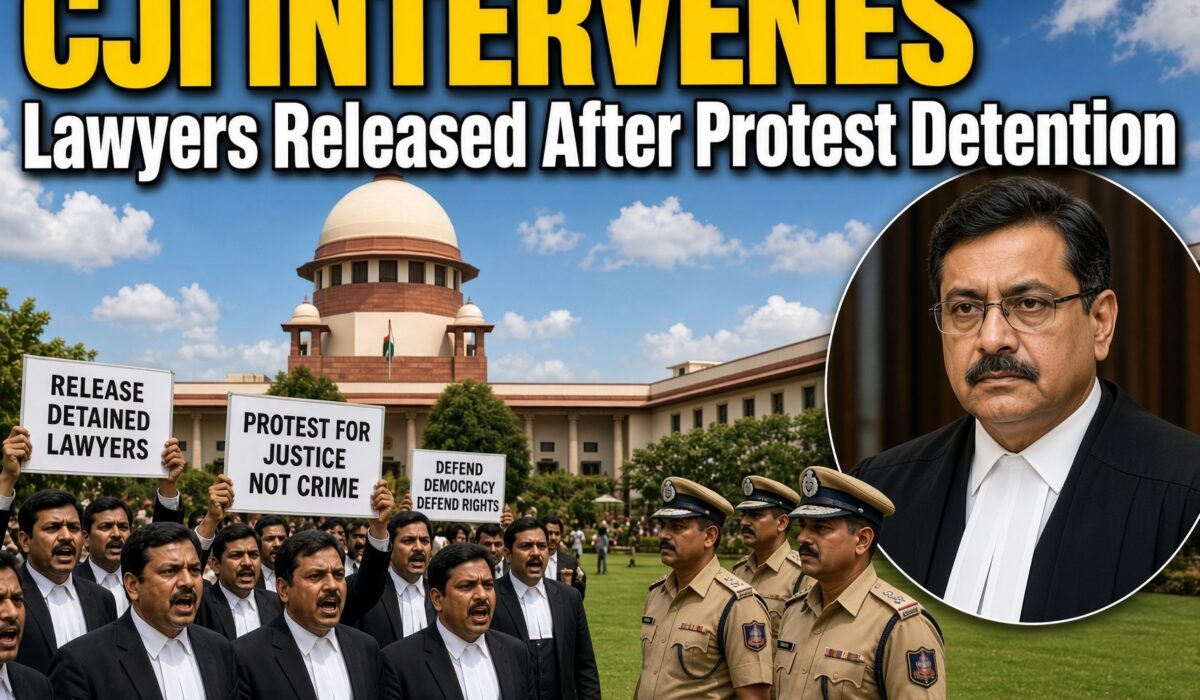
The key development was the intervention of Chief Justice of India (CJI) Surya Kant after the Supreme Court Bar Association (SCBA) raised concerns about the detention of advocates, including women lawyers, and alleged excessive use of police force. Subsequent reporting by The Times of India confirmed that the CJI’s verbal intervention was followed by the release of the detained lawyers.
The central issue is the balance between maintaining public order and protecting the fundamental rights of citizens, including their right to peaceful protest and the legal profession’s ability to function independently.
2. Key events and developments
1. Lawyers reportedly detained
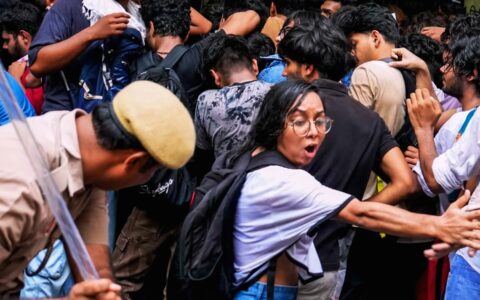
Delhi Police detained advocates who were protesting in the Supreme Court area. Reports said that some lawyers were taken from outside the court premises, while others were detained from their chambers. Women advocates were among those whose detention was raised by the SCBA.
2. SCBA seeks urgent intervention
The Supreme Court Bar Association passed a resolution calling for the safety and whereabouts of detained lawyers to be established, the release of those without lawful grounds for detention, and an examination of the reported use of force.
3. CJI Surya Kant intervenes
The CJI was informed by the SCBA, the Supreme Court Advocates-on-Record Association (SCAORA), and Solicitor General Tushar Mehta. He subsequently communicated with the authorities regarding the detained lawyers.
4. Lawyers reportedly released
According to the CJI and SCBA president Pradeep Rai, the lawyers were released following the intervention. The SCBA also requested scrutiny of the circumstances surrounding the detentions.
3. Background: Why were protests taking place?
The detentions occurred amid a broader security operation ahead of a proposed demonstration by the Cockroach Janta Party (CJP) at Jantar Mantar in New Delhi.
The protest targeted CEC Gyanesh Kumar and raised allegations concerning the Special Intensive Revision (SIR) of electoral rolls and the voter-registration process. Delhi Police had denied permission for the proposed demonstration, citing issues including insufficient notice and compliance with protest rules.
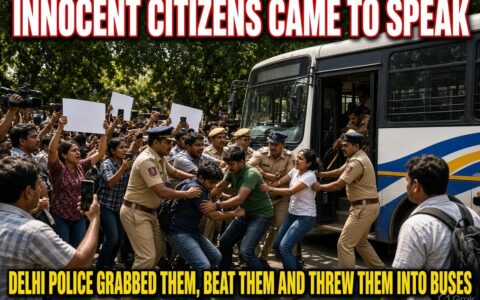
The wider operation reportedly involved extensive police and paramilitary deployment, barricading, traffic restrictions and detentions of protesters and political figures.
It is important to distinguish between the different issues: the political protest concerned election-related grievances, while the lawyers’ detention raised a separate question about police conduct and the treatment of advocates.
The reported allegations regarding electoral irregularities should not be treated as established findings simply because they prompted a protest.
4. Major insights and implications
A. Judicial intervention as a safeguard
The CJI’s intervention demonstrates the potential importance of institutional channels when concerns arise about police action affecting members of the legal profession.
The SCBA raised the issue through a formal resolution and direct communication. The subsequent release of the lawyers illustrates how intervention by senior judicial leadership can help address an urgent dispute.
However, the episode does not, by itself, establish whether every detention was unlawful or whether any individual officer committed misconduct.
B. The right to peaceful protest remains central
Article 19(1)(a) of the Indian Constitution protects freedom of speech and expression, while Article 19(1)(b) protects the right to assemble peacefully and without arms. These rights are subject to constitutionally permitted restrictions.
Authorities can impose lawful restrictions for public order and other legitimate purposes, but preventive measures and detentions must also comply with applicable law.
The central question is whether restrictions are necessary, proportionate and legally justified in the circumstances.
C. Lawyers’ independence and professional dignity
The detention of advocates in or around the Supreme Court complex carries particular significance because lawyers play an essential role in the administration of justice.
The incident raises questions about whether lawyers can exercise their rights without undue interference and whether allegations of police excess are investigated transparently.
At the same time, professional status alone does not exempt advocates from generally applicable laws. The critical issue is whether police action has a lawful basis and follows due process.
D. Accountability matters as much as release
The immediate release of the detained lawyers was an important development, but it does not resolve every concern raised by the episode.
The SCBA also called for an examination of the circumstances surrounding the detentions and the reported use of force.
A complete resolution would require clarity about the legal grounds for detention, the treatment of those detained, and whether any improper conduct occurred.
E. Public confidence in democratic institutions
The confrontation places several institutions under scrutiny: the police, the judiciary, the legal profession and the authorities responsible for managing public demonstrations.
Public confidence depends not only on maintaining order but also on the perception that legal safeguards apply consistently, irrespective of political affiliation or the identity of the protesters.
5. Critical analysis: What the incident reveals
| Dimension | Key takeaway |
|---|---|
| Rule of law | Police powers must remain subject to legal safeguards and due process. |
| Civil liberties | Peaceful assembly is constitutionally protected, subject to lawful restrictions. |
| Judicial oversight | The CJI’s intervention helped address an urgent concern involving advocates. |
| Police accountability | Allegations of excessive force warrant examination rather than assumption or dismissal. |
| Democratic governance | Public order and the protection of dissent must be balanced. |
An important distinction: the available reporting establishes that the SCBA raised concerns and that the CJI intervened before the lawyers were reported released. It does not independently establish that all the detentions were illegal, that every protester was peaceful, or that the police acted with a political motive.
A balanced assessment should separate confirmed developments from allegations and interpretations.
6. Overall conclusion
The episode is significant because it brought the treatment of lawyers, the exercise of police powers and the protection of peaceful protest into direct focus near India’s highest court.
CJI Surya Kant’s intervention and the reported release of the detained advocates provided an immediate response to the SCBA’s concerns. Yet the larger questions concern the circumstances of the detentions, the proportionality of police action and the need for accountability wherever misconduct is established.
The broader democratic lesson is that public order and civil liberties should reinforce one another, not be treated as mutually exclusive objectives. A functioning democracy requires lawful crowd management, protection for peaceful dissent, and credible mechanisms for addressing allegations of excessive force.
7. Source references
The original article requested for analysis: