📰
Uncategorized
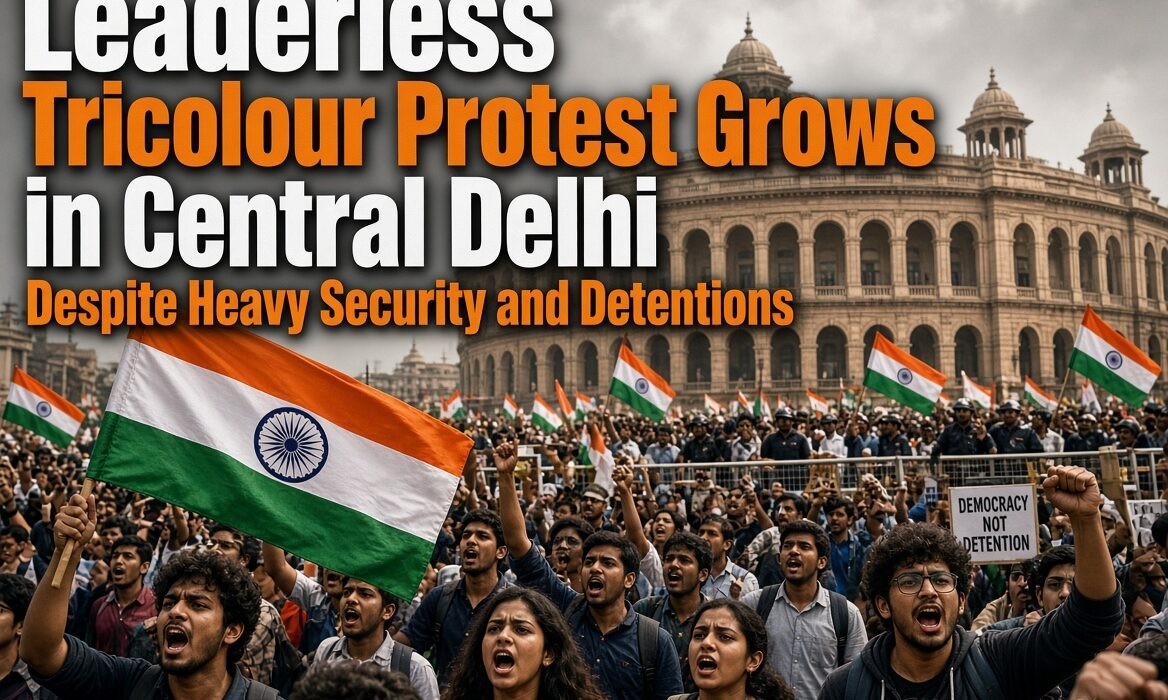
New Delhi, October 17, 2026 — A gathering of citizens waving the Indian tricolour and protesting alleged electoral irregularities escalated through the evening of October 16 in central Delhi. What began as a call to assemble at Central Park in Connaught Place expanded into repeated flash protests across adjoining areas, with participants continuing to arrive even as security forces made detentions and imposed restrictions.
The mobilisation followed a call for a “Lehra Do Tiranga” (Hoist the Tricolour) gathering, primarily demanding the resignation of Chief Election Commissioner Gyanesh Kumar over claimed irregularities in the Special Intensive Revision of electoral rolls. Authorities had closed Central Park for administrative reasons and enforced prohibitory orders under Section 163 of the Bharatiya Nagarik Suraksha Sanhita. Thousands of police and Central Armed Police Forces personnel were deployed with barricades and cordons. Founders and organisers of the call, including Abhijeet Dipke, along with student activist Neha Bora, were among those detained; overall detentions reached around 150.
Situation reports through the evening described an initially limited presence that grew as people continued to reach the area independently via metro and other routes. Early assessments indicated no large-scale mobilisation was expected. By later hours, detentions rose while crowds kept building, with participants stating they had come to hoist the national flag and express concern over the country’s institutions and democratic processes. Many of those present were young people who arrived on their own rather than under the direction of established political leaders. Slogans focused on institutional accountability, criticism of electoral processes and earlier police actions, and national pride. Similar tricolour-related gatherings were reported in other cities.
Despite large deployments of police and paramilitary forces and cordoned zones, people continued to arrive and regroup in stretches of Connaught Place, Mandi House and nearby areas. Conversations with participants indicated they had travelled from multiple states and viewed the act of unfurling the flag as a response to perceived threats to voting rights and constitutional norms. By late evening the gatherings had spread across central Delhi, with numbers rising into the thousands according to field accounts. Security measures and detentions did not halt the inflow, and the movement proceeded without prominent opposition political leaders present on the ground to direct it.
The events form part of a series of recent mobilisations in the capital over electoral-roll concerns and the right to protest, following earlier actions at Jantar Mantar—which has since been denotified as a designated protest site—and related detentions. The October 16 developments showed that public participation continued despite preemptive security measures and the absence of conventional political leadership on site.