Indian Politics
Kharge Calls EC a ‘Puppet’, Opposition Plans Nationwide March and October 6 Siege of the Poll Panel
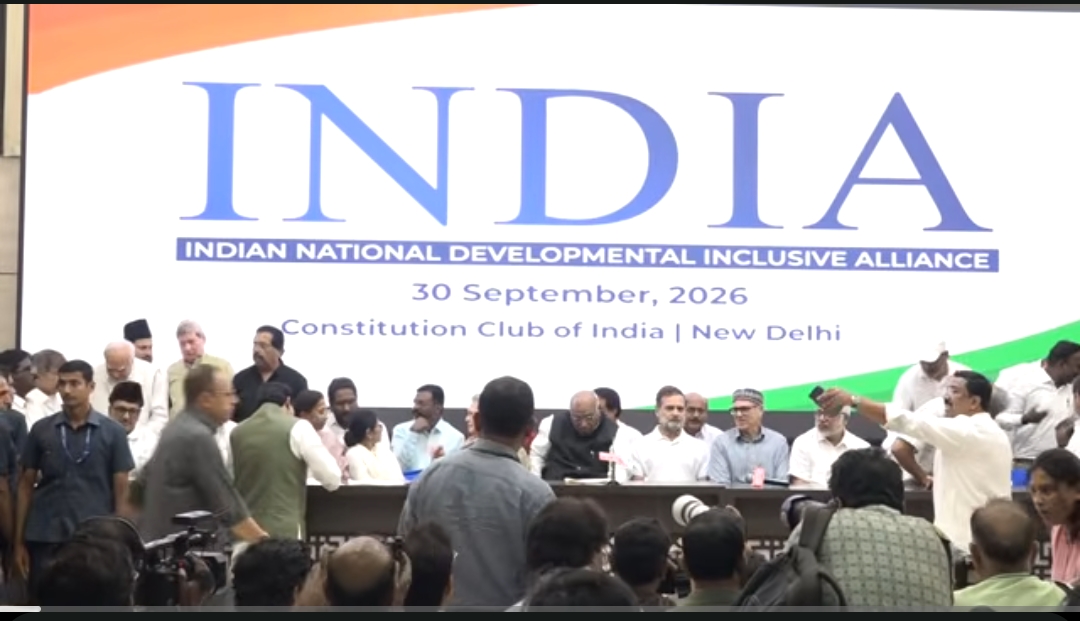
After a nearly three-hour meeting of the INDIA bloc at New Delhi’s Constitution Club on Wednesday, Congress president Mallikarjun Kharge delivered a blunt message: opposition MPs will gherao the Election Commission on October 6, and parties will take out a “Save Democracy March” in every district from October 2 to 8. His central charge fitted into one line — the Election Commission, he said, has been reduced to a puppet.
This was not just theatre after a press conference. It was the opposition’s most coordinated offensive in weeks, folding three fights into one: the Special Intensive Revision (SIR) of electoral rolls, the older dispute over EVMs and VVPAT, and a fresh assault on the independence of Chief Election Commissioner Gyanesh Kumar.
Who turned up — and who stayed away
Congress said 19 parties attended. Jairam Ramesh put their combined strength at 178 Lok Sabha MPs and 62 Rajya Sabha MPs. The list included Congress, the Samajwadi Party, Trinamool Congress, NCP (Sharad Pawar), Shiv Sena (UBT), RJD, CPI(M), CPI, National Conference, PDP, JMM, CPI-ML, IUML, Kerala Congress (M), MDMK, VCK, RSP, All India Forward Bloc and Kerala Congress (Joseph).
Mamata Banerjee was in Delhi and sat through the meeting. Sonia Gandhi and Rahul Gandhi were present. Akhilesh Yadav stayed away because of Rajya Sabha nominations in Uttar Pradesh and a farmers’ convention in Lucknow; he sent MPs instead. AAP, Vijay’s TVK and M.K. Stalin’s DMK did not attend. DMK separately said it would still support a parliamentary motion to remove the CEC.
Those absences matter. The INDIA bloc has frayed and re-formed since 2024. On SIR and “vote chori,” it still found a common platform — because a fight over the voter list strikes at the base of every election.
Kharge’s charge: “Modi-Shah are using the Commission like a puppet”
Kharge’s press remarks were direct and angry. He said Prime Minister Narendra Modi and Home Minister Amit Shah were using the Election Commission as a puppet, that votes were being stolen, and that elections were being won by theft. Wherever opposition leaders were fighting for democracy and for the young, he alleged, they were being harassed too.
The immediate spark was not only opposition politics. A recent Indian Express report said Election Commissioners Sukhbir Singh Sandhu and Vivek Joshi had recorded written objections at least 14 times in 10 months to CEC decisions and orders — especially on SIR, additions and deletions, Form 6 and the internal portal. Kharge treated that as a question mark on Kumar’s “integrity and intentions.” If the CEC had even “an iota of Constitutional or moral shame,” he said, Kumar should resign and turn approver against those interfering in the rolls.
A day earlier, at the Congress Working Committee, Kharge had already called the CEC a “puppet of the Modi government” and demanded the resignations of Modi and Shah as well. On Wednesday that language became the INDIA bloc’s joint line.
The demands: pre-SIR rolls, ballot papers, an appeal before deletion
Kharge set out a list of conditions for future polls:
- Use the pre-SIR electoral roll for coming elections.
- Full transparency in every revision — constituency-wise and booth-wise data on additions, deletions and corrections.
- Notice, reasons and an effective appeal before any legitimate voter is struck off.
- Protection for eligible voters left out by administrative failure.
- Ballot-paper voting instead of EVMs.
- Simpler registration for first-time and young voters.
- An Election Commission that commands confidence across the political spectrum.
The most explosive number was his claim that 13.3 crore voters had been “blatantly” removed from the rolls. The opposition calls this disenfranchisement. The government and the Commission call it a clean-up of duplicate, dead and redundant names. That gap in reading is the real battlefield.
October 2 to 8 on the streets, October 6 at Nirvachan Sadan
The calendar is the clearest outcome of the meeting.
October 2 is Gandhi Jayanti. From that day through October 8, the opposition will march across the country. Kharge said about 20 parties would together take out a “Lokshahi Bachao March” in every district. On October 6, opposition MPs will gherao the Election Commission in Delhi.
The dates are political by design. Starting on Gandhi Jayanti gives the campaign a moral frame. A parliamentary siege on the 6th ties the House fight to a street fight. With Rajya Sabha elections ahead and roll revision still under way in several states, the opposition wants the issue out of committee rooms and into towns and villages.
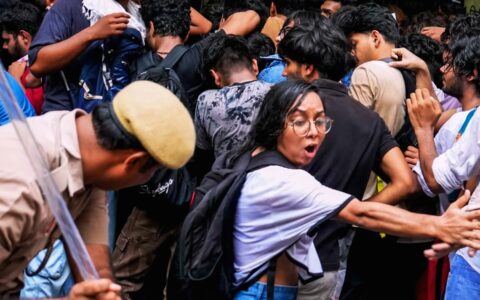
This is not the first attempt. In August 2025, nearly 300 INDIA bloc MPs marched toward the Commission over Bihar’s SIR and “vote chori.” Police stopped them mid-way, detained several leaders, some women MPs climbed barricades, and TMC’s Mahua Moitra fainted. October 6 is meant to revive that memory.
What SIR is — and why the fight deepened
SIR is a Special Intensive Revision of electoral rolls. The Commission ordered it on June 24, 2025 for all states and Union Territories, beginning with Bihar, then West Bengal and the rest. The poll panel says the decision was unanimous and that the Supreme Court upheld it on May 27, 2026. On September 26, 2026, Kumar sat with both commissioners and the Commission said left-out voters in states where SIR is complete can apply again through Form 6. Deadlines for claims and objections were also extended in Delhi and Maharashtra.
The opposition reads the same process differently. It argues that large numbers of poor, migrant, young and minority voters are being cut; that new Form 6 and declaration conditions deter first-time voters; that control over internal software has been centralised; and that decisions moved ahead despite repeated objections from two commissioners.
Rahul Gandhi had earlier listed five alleged “vote theft” patterns in Karnataka, Maharashtra, Haryana and Bihar — duplicate voters, fake addresses, bulk voters at one address, invalid photos, and misuse of Form 6. The SIR row is the next chapter of that campaign.
The other side: BJP and the Commission
The BJP and several BJP chief ministers have called the charge a conspiracy of parties that keep losing elections. The ruling party says SIR removed more than one crore duplicate entries and about 2.8 crore names of deceased voters. Those who benefited from dirty rolls, it argues, are now crying foul. Yogi Adityanath accused the opposition of spreading confusion. Devendra Fadnavis quipped that no vote was stolen — Rahul Gandhi’s mind was.
The Commission’s official line is that dissent and internal debate are normal in any institution, but final orders carry legal sanction and were issued through established procedure. It also says the Supreme Court has upheld the Form 6 declaration used during SIR. The opposition calls that clarification insufficient. For it, the issue is not only legality. It is trust.
What comes next
Three fronts open at once.
The first is Parliament. The opposition is talking of a fresh notice and signatures to seek the CEC’s removal. Constitutionally that is hard: it needs a special majority in both Houses and the President’s assent. The numbers are not with the opposition. The motion itself, though, is a political weapon.
The second front is the street — the October 2–8 marches and the October 6 gherao. The third is legal and technical: roll data, booth-wise deletions, enrolment of young voters, and the old demand to return to paper ballots.
The larger test is whether this stays a Delhi press-conference story or reaches voters in states, including Gujarat. SIR is finished or under way across much of the country. If ordinary voters believe their names are truly at risk, the campaign will travel. If they see it as politics after defeat, the marches will be loud and limited.
Kharge chose hard words on purpose: puppet, vote theft, “one person, one vote, one value” under threat. Those phrases attack confidence in an institution, not only a procedure. The government’s reply is equally hard: that the opposition is smearing a constitutional body to hide its own losses. Both sides say democracy is in danger. They only name different culprits.
Whatever unfolds outside Nirvachan Sadan on October 6 will not just be a clash between MPs and police. It will be a test of whether India’s voter list is still a shared foundation — or the newest battlefield in the contest for power.