
Indian Politics
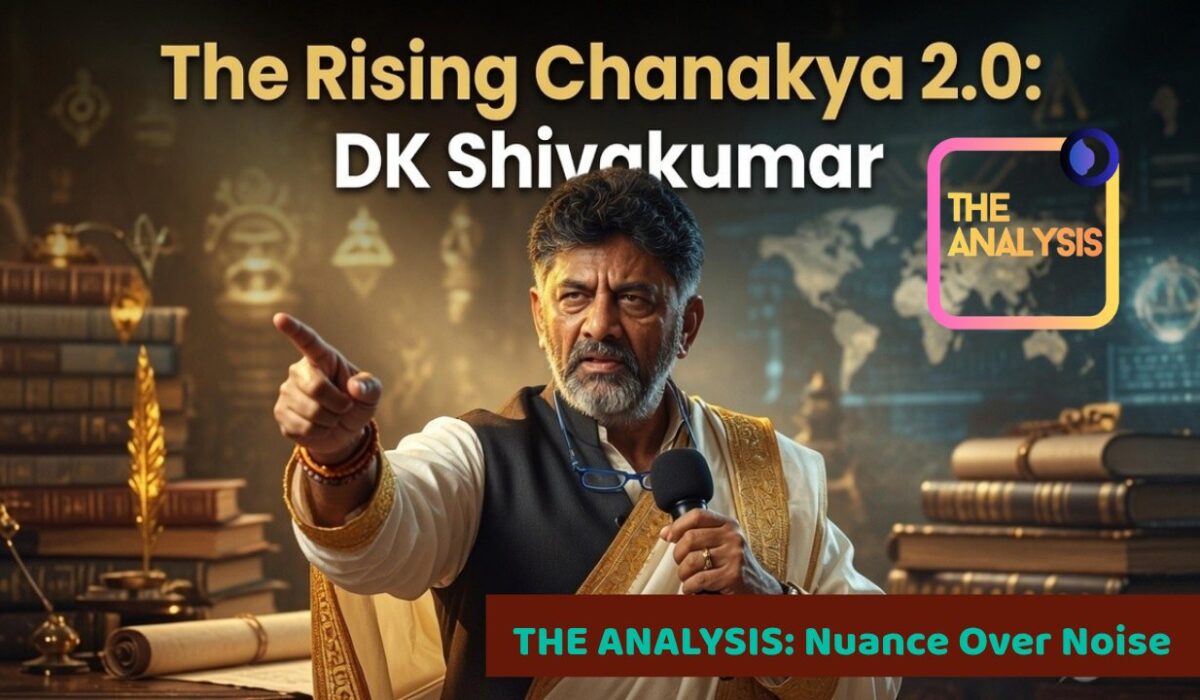
The Rising Chanakya 2.0: DK Shivakumar’s Ruthless Rise from Deputy CM to Karnataka’s Master Strategist – 3 Modi Ministers Plead
The Rising Chanakya 2.0: DK Shivakumar
A striking narrative gaining traction in political circles claims that Karnataka Chief Minister DK Shivakumar has reduced three Union ministers from Karnataka — HD Kumaraswamy (JD(S)), Prahlad Joshi (BJP), and Shobha Karandlaje (BJP) — to pleading before him for transparency in electoral processes and even threatening legal action.
While the rhetoric is sharp, the underlying political developments in June–July 2026 are real and significant. They reveal a decisive shift in Karnataka’s power dynamics and offer early signals for the 2028 Assembly elections and the broader opposition’s southern strategy ahead of 2029.
D.K. Shivakumar sworn-in as 25th Chief Minister of Karnataka – The Hindu
The MLC Earthquake: Congress Wins 5 of 7 Seats Through Cross-Voting
In the Karnataka Legislative Council (MLC) elections held in mid-June 2026, the ruling Congress achieved a stunning result — winning 5 out of 7 seats. This was the first major electoral test after DK Shivakumar assumed the Chief Minister’s post.
Key highlights:
Congress’s fifth candidate, Vinay Karthik (a close DK Shivakumar aide), topped the poll with the highest first-preference votes.
Reports indicate 11 MLAs from the opposition (7 from BJP + 4 from JD(S)) cross-voted in favor of Congress candidates.
JD(S) failed to win even its lone seat; its candidate polled just 14 votes.
BJP and JD(S) leadership were left stunned. Karnataka BJP chief BY Vijayendra announced that legislators who cross-voted had been identified, with disciplinary action expected. High command meetings in Delhi followed. The episode has intensified factionalism within the Karnataka BJP unit and raised serious questions about the future of the BJP-JD(S) alliance in the state.
This was not a routine win. It was a demonstration of booth-level control, real-time intelligence, and the ability to influence or neutralize opposition legislators — classic traits of a master political operator.
The SIR Battle: DK Shivakumar Counters BJP’s Voter List Revision Play
Parallel to the MLC success, another high-stakes contest is unfolding: the Special Intensive Revision (SIR) of electoral rolls, launched by the Election Commission of India across Karnataka and other states in late June/early July 2026.
Door-to-door enumeration is underway.
Congress leaders, including DK Shivakumar, have accused the exercise of being a potential tool for large-scale deletion of opposition-leaning voters (a charge BJP has faced in other states previously).
DK Shivakumar has publicly warned that citizens not found on the updated rolls could lose access to government benefits, while simultaneously urging full participation and forming special committees to file objections.
On the other side, Union Minister HD Kumaraswamy has alleged “massive irregularities” by the Congress government in the SIR process and accused the state administration of influencing the ECI-mandated exercise.
Some analysts interpret these developments as DK Shivakumar actively countering BJP’s SIR strategy through superior booth management and political counter-pressure — forcing even senior Union ministers to seek assurances or transparency from the state leadership.
Whether one accepts the “manipulation” framing or sees it as aggressive political management, the outcome is clear: DK Shivakumar has seized the initiative on the voter list issue instead of remaining on the defensive.
Why Three Modi Cabinet Ministers Are Reportedly “Pleading”
The central claim — that HD Kumaraswamy, Prahlad Joshi, and Shobha Karandlaje are reduced to pleading before DK — is dramatic but reflects real tensions:
Kumaraswamy’s authority within JD(S) has taken a hit after the MLC debacle; his statements on cross-voting and SIR show a leader trying to reassert relevance.
BJP ministers from Karnataka are caught between New Delhi’s expectations and ground realities in a state where the ruling party has just proved its organizational edge.
Legal threats and demands for transparency are standard political tools when one side feels the electoral machinery (or voter lists) tilting against it.
In Karnataka’s Vokkaliga-dominated political arithmetic and complex caste coalitions, DK Shivakumar’s ability to deliver results — first as KPCC president, now as CM — has made him the single most consequential Congress leader in the state in decades.
National Implications: A Boost for Congress in the South?
This Karnataka story carries weight beyond the state:
For Congress & Rahul Gandhi: A confident DK Shivakumar strengthens the INDIA bloc’s southern flank. If Congress can consolidate gains in Karnataka by 2028, it creates a viable southern base that complements any northern recovery.
For BJP: The cross-voting shock and SIR controversy expose vulnerabilities in Karnataka’s opposition coordination. Factionalism in the state BJP unit and questions over the JD(S) alliance are headaches Amit Shah’s team would rather avoid months before key electoral cycles.
For South Indian Politics: DK Shivakumar is emerging as a pan-South communicator who can blend organizational muscle with emotional connect — something the BJP has struggled to counter consistently in the region outside pockets.
Risks and Caveats in the “Chanakya 2.0” Narrative
No leader is invincible. DK Shivakumar’s current momentum faces real tests:
Internal Congress dynamics (Siddaramaiah loyalists, other factions).
Legal and institutional pushback on the SIR process from ECI or courts.
Over-centralization of strategy around one individual.
The 2028 election will be fought on governance delivery, not just electoral arithmetic.
The “Chanakya of South India” label is currently more aspirational than proven. What is proven is that DK Shivakumar has executed two significant political successes in quick succession — the MLC sweep and the aggressive positioning on SIR — at a time when the opposition nationally needed morale boosters.
Bottom Line: A Shifting Balance in Karnataka
This viral narrative captures a genuine moment of political flux. DK Shivakumar has demonstrated tactical superiority in recent weeks that has left the BJP-JD(S) combine reactive rather than proactive.
Whether this translates into a durable structural advantage for Congress in Karnataka — and a stronger southern pillar for the national opposition — will depend on execution in the coming months of the SIR process, bypoll management, and preparation for 2028.
For now, one fact stands out: In Karnataka politics of 2026, DK Shivakumar is calling the shots, and even Union ministers from the state are being forced to respond to his moves rather than dictate the agenda.
1 Reader Response